Tips for Exercising in Cold Weather
When it is cold outside it can be harder to find the motivation to get up and get moving. The days are shorter and darker, and getting dressed appropriately can seem like so much work.
However, exercising is worth it. Regular moderate-to-vigorous physical activity has been shown to improve sleep, quality of life, and physical function. It also improves memory, attention, brain processing speed, and mood.
I recommend you get 150 minutes or more of moderate-intensity aerobic activity plus two strength building workouts every week. This article will give you tips you need to keep going strong in cold weather.
Wear multiple layers
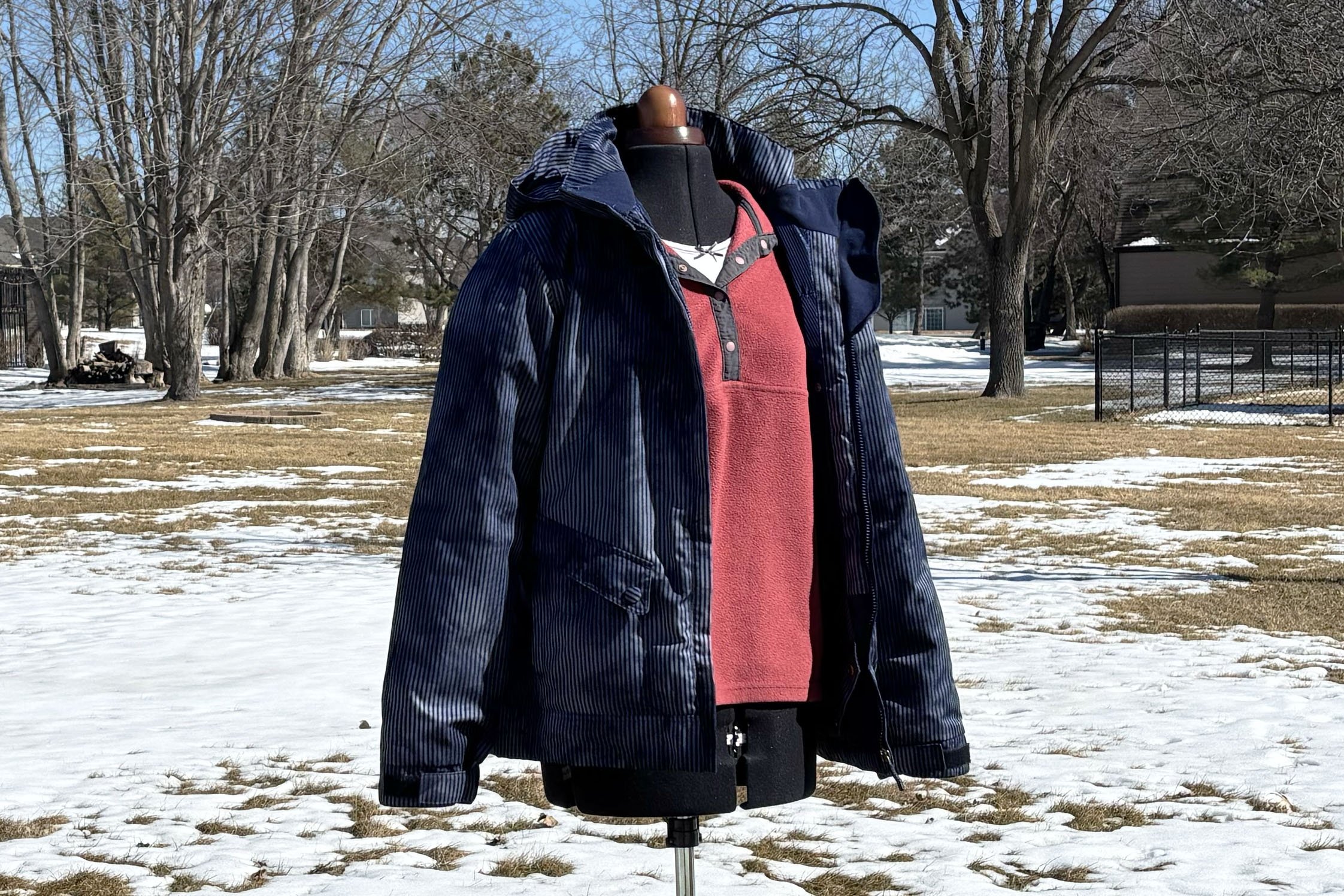
Dress not just in layers, but smart layers. Start with a wicking layer to move moisture from your skin and keep you dry. Add an insulating layer, like fleece or fluffy wool, to trap air. Finish with a wind- or water-resistant layer.
You will find a full discussion of how to dress for cold weather in my article, “How to Dress for Cold Weather.”
Warm up before going out
Going directly from sitting in a warm house to being active in the cold raises the chances of health events and injuries.
A five-minute dynamic warmup like this one will help.
Prepare: Stomp your feet so they are under your hips. Soften your knees. Wiggle your hips. Roll your shoulders back. Raise the top of your head straight up.
Cow and cat: Inhale, press your chest forward and arch your back. Exhale, reach forward and stretch your back. Repeat.
Knee bends: Bend both knees, lower your butt down while keeping your chest up. Stand up. Repeat.
Butterfly wings: Breathe in, raise your arms into goalpost position. Exhale, touch your forearms in front. Inhale, open to goalpost.
Repeat.Stationary side lunge: Widen your stance. Slowly bend one knee, lowering your butt toward your heel. Pause, and straighten up.
Slowly bend the second knee. Pause, and straighten up. Repeat.Spinal twist: Send one shoulder back and around. Pause. Send your other shoulder back and around. Move slowly, using your muscles to move you, not momentum. Repeat.
High knees: Lift your knees one at time. Aim for hip height, but any height is good. Swing your arms. Start slowly and move faster.
You will find a follow-along video in my article, "Warmup for Snow Shoveling." It's good for doing prior to any cold outdoor activity, not just shoveling.
Stay hydrated
You may not get hot and sweaty like on a summer day, so you may not think you need to drink as much. However, the cold, dry air is stealing more moisture than you realize. You need to drink plenty of fluids.
If it is really cold out and you are going for a long bike ride, you may have to worry about your water freezing. Insulated water bottles not only keep water cool in hot weather, they can delay water freezing in cold weather. Also, store your bottle upside down to prevent the spout from freezing.
Watch out for windchill
Windchill is the term for what the cold feels like when you combine the actual air temperature and the wind speed. It takes into account how quickly heat is drawn from the body. Even moderately cold air can cause rapid cooling when strong winds strip away the layer of warm air that normally insulates you.
This accelerated heat loss can lead to frostbite on exposed skin in a matter of minutes at very low windchill values, and hypothermia can develop more quickly than you might expect. Wind-driven cold also increases the strain on the cardiovascular system as your body works harder to maintain core temperature, raising the risk for heart-related events in at-risk individuals.
Because the thermometer reads higher than the windchill is, it can cause you to not take the cold as seriously as you should. Check the windchill value before you head out.
Watch out for ice
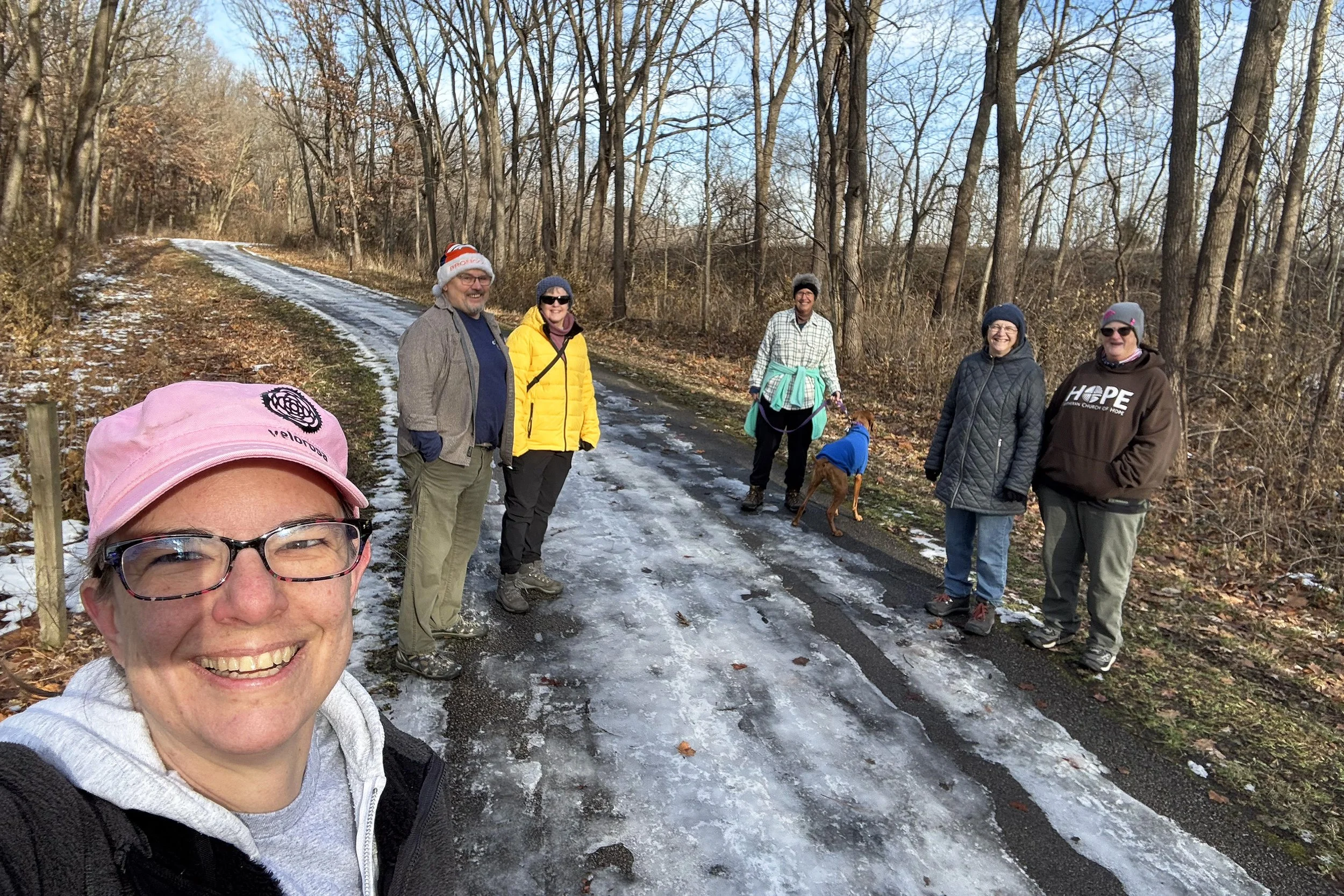
Many trails and surfaces can be covered in ice in cold weather.
After a fresh snow you might not see ice under the snow. Be alert. When we finally get a warmer day and you really want to get outside, you may find the ice is wet and extra slippery.
Take shorter steps (think penguin) and keep your center of gravity over your feet, not out to the front, back, or side.
If you have a high risk of injury from falling, it may be better to move your workout indoors.
Don't skip the sun protection
The sun is lower in the sky this time of year. However, it can still damage your skin and eyes, so wear your sunscreen and sunglasses.
You'll really appreciate the glasses if it's snowy out and the sun is reflecting in your eyes. Lip balm comes in UVA/UVB blocking varieties which can protect and moisturize your lips at the same time.Be visible
Cold weather season is also "gets dark early" season. Wear a reflective vest if you will be out at that time of day. Put a headlight and taillight on your bike and make sure the batteries are charged.
Carry emergency supplies
Don't try to carry everything, but do consider a tucking a couple chemical hand warmers and a mylar blanket into a waist pack. Put your phone in a pocket close to your body to keep it warm. Very cold temperatures can cause the battery to fail.
Know the signs of hypothermia and frostbite
Symptoms of hypothermia include, but are not limited to shivering or lack of shivering, clumsiness, shallow breathing, slurred speech, and confusion. Consult your doctor or another reliable source like the Mayo Clinic for more information. Know when to call 911.
Exercise indoors
Sometimes it makes more sense to work out indoors. Have some pre-planned workouts you can do in your home or at the gym, or make a plan to meet some friends to walk at the mall.
My brother recently gave me a tour of the downtown Des Moines skywalks. They weren’t crowded and there were plenty of maps. Except when I was checking and trying to memorize the maps, we kept a really brisk pace. A few other cities have skywalk/skyway systems too.
My favorite winter option is to put my bicycle on the indoor trainer and pedal away while I watch archeology documentaries. If you would like more information on indoor bike trainers, read the “Indoor Bike Trainer Buying Guide” I wrote.
Cold weather may make your exercise more complicated, but don’t let it prevent you from exercising completely.

Note: Learn more about the “150 minutes or more of moderate-intensity aerobic activity plus two strength building workouts“ advice and other Physical Activity Guidelines for Americans in my article “Physical Activity Guidelines for Americans.”
Note: For help creating workouts indoors or in the cold, contact me.